June 27th, 2026
Interior
The 7 Interior Design Mistakes That Make Homes Feel Smaller
June 27th, 2026
Interior
The interior design mistakes that make homes feel smaller include poor furniture placement, inadequate lighting, heavy curtains, excess furniture, busy colour schemes, clutter, and underused mirrors.
These everyday design choices reduce visual space, interrupt movement, and make even well-sized homes feel cramped.
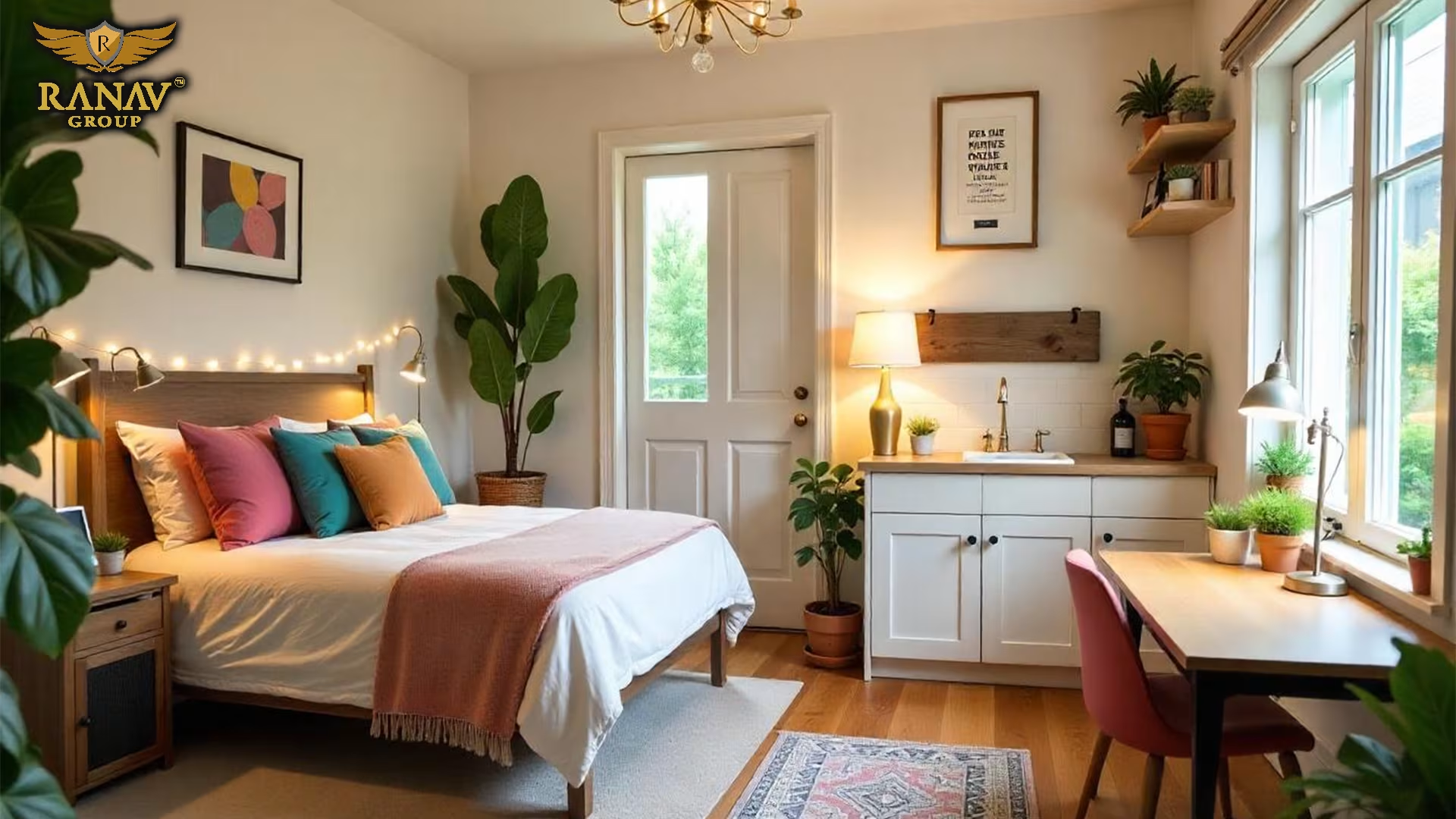
If your home feels smaller than it should, the problem is often the way the space is arranged rather than the actual floor area. The good news is that you don't need expensive renovations to fix it. Often, thoughtful interior design has a greater impact on perceived spaciousness than adding extra square footage. Simple interior design changes can make rooms feel brighter, more open, and more comfortable.
How Can You Make a Home Feel Bigger Without Renovation?
You can make a home feel bigger without renovation by improving the layout, increasing natural and artificial light, reducing visual clutter, choosing lighter colours, limiting unnecessary furniture, and using mirrors strategically.
These changes improve how the eye perceives space without changing the home's actual dimensions. You can make a home feel bigger without structural changes by:
These simple updates improve visual flow and create the impression of a larger, more spacious home.
Signs Your Home Feels Smaller Than It Should
You may be making one or more of these common interior design mistakes if:
The room feels busy even after cleaning.
Pushing all your furniture against the walls can actually make a room feel smaller. Instead of creating more space, it leaves a large empty centre while compressing everything around the edges.
Although this arrangement seems like it creates more floor space, it actually reduces visual balance and makes the room feel boxed in. Pulling a sofa slightly away from the wall or angling an accent chair creates a better flow and makes the space feel more natural.
Why It Works
Our eyes perceive spaciousness through movement and balance. Furniture grouped into functional zones creates depth and improves how large a room feels.
Is Your Lighting Making Rooms Feel Smaller Than They Are?
Poor lighting is one of the biggest reasons a room feels smaller than it really is. Dark corners and uneven illumination visually shrink the space, making walls appear closer than they are.
A single ceiling light often leaves shadows around the room's edges, making walls appear closer than they are. Layering lighting with ceiling fixtures, floor lamps, table lamps, and natural daylight brightens every corner and expands the room visually.
Why It Works
Even lighting reduces shadows, making the boundaries of a room appear wider and more open. Studies in environmental psychology have found that brighter, evenly distributed lighting improves the perception of openness by reducing visual contrast and making room boundaries easier to distinguish. This is one reason layered lighting is commonly recommended in interior design.
Do Heavy Curtains Make a Room Look Smaller?
Heavy, dark curtains can make a room look smaller by blocking natural light and adding visual weight around windows. They reduce brightness and make windows appear smaller than they actually are.
Dark fabrics absorb light, while thick curtains create visual weight around windows. Choosing lighter fabrics, neutral colours, or sheer curtains allows more daylight inside and makes windows appear larger.
Hanging curtains slightly above and wider than the window frame also creates the illusion of taller ceilings and wider walls.
Why It Works
More natural light increases brightness, making interiors feel larger and more inviting.
Does Too Much Furniture Make a Room Feel Cramped?
Too much furniture is one of the quickest ways to make a room feel cramped. Every additional chair, table, or decorative piece reduces visible floor space and interrupts movement
Adding extra chairs, side tables, or decorative pieces may seem harmless, but every additional item reduces breathing room. A few well-proportioned furniture pieces create a cleaner layout than many smaller items competing for attention.
Sometimes the most luxurious design decision is removing furniture rather than adding it.
Why It Works
Open floor space allows the eye to move freely across a room, creating a stronger sense of spaciousness.
Can Too Many Colours Make a Room Feel Smaller?
Using too many colours and patterns can make a room feel smaller because they create visual interruptions. When every surface competes for attention, the space appears busier and more confined.
When walls, furniture, flooring, and décor all feature different colours, the eye constantly stops at each transition. A consistent palette allows the eye to travel smoothly across the room, making it feel more spacious.
Neutral tones with one or two accent colours often create the most cohesive interiors.
Why It Works
Visual continuity reduces distractions and creates the impression of larger, connected spaces.
Is Clutter the Real Reason Your Home Feels Small?
Clutter is often the biggest reason a home feels smaller than it actually is. Crowded counter tops, overflowing shelves, and unnecessary décor make rooms feel full, regardless of their size.
Counter tops covered with everyday items, overflowing shelves, and unnecessary decorations make rooms appear full. Keeping frequently used items organised and maintaining clear surfaces instantly improves how spacious a home feels.
Decluttering is one of the most affordable ways to transform an interior.
Why It Works
Clear surfaces allow the eye to focus on the room itself rather than everything inside it.
Do Mirrors Really Make Small Rooms Look Bigger?
Mirrors are one of the simplest ways to make a room feel bigger. They reflect natural and artificial light, creating the illusion of greater depth and brightness.
A mirror positioned opposite a window doubles the amount of visible light and creates the illusion of greater depth. Reflective finishes such as glass furniture, glossy surfaces, and mirrored accessories produce a similar effect without overwhelming the room.
Why It Works
Reflective surfaces bounce light throughout the room, extending visual depth and reducing dark areas. Interior designers frequently position mirrors opposite windows because reflected daylight increases perceived brightness and creates the illusion of greater depth. This simple technique can make compact rooms feel noticeably more spacious without changing the floor plan.
In Short
The easiest ways to make a home feel bigger are:
These simple interior design improvements create a brighter, more open home without increasing its size. Whether you're redecorating, renovating an existing home, or planning a new villa, following these interior design principles will help create brighter, more functional, and visually spacious interiors.
Spacious homes are created through thoughtful interior design rather than additional square footage. Improving furniture placement, lighting, colour continuity, storage, and visual balance helps every room feel brighter, more functional, and significantly larger—without major renovation.
Frequently Asked Questions
Can paint colour alone make a small room feel bigger?
Light colours like white, cream, beige, and soft grey reflect natural light, making rooms feel brighter, larger, and more inviting
Do mirrors really make a noticeable difference in small rooms?
Yes. Mirrors reflect natural light and create the illusion of greater depth, making rooms feel brighter and significantly more open when positioned opposite windows or other light sources.
Is it better to have fewer large furniture pieces or many smaller ones?
In most cases, fewer well-proportioned furniture pieces work better. Too many small items create visual clutter and interrupt floor space, making a room feel cramped.
Can ceiling height affect how spacious a room feels?
Yes. Taller ceilings naturally make rooms feel larger, but even standard-height ceilings can appear higher by hanging curtains closer to the ceiling and using vertical design elements.
Should furniture match wall colours?
Furniture in similar tones to the walls creates a seamless appearance with fewer visual breaks, making interiors feel larger and more cohesive.
How quickly can these changes be made?
Most improvements, such as rearranging furniture, decluttering, changing curtains, improving lighting, and adding mirrors, can be completed over a weekend without major renovation costs.
Explore Our Recent Blogs
June 27th, 2026
Interior
June 22nd, 2026
Real Estate
Soukya Road vs. Sarjapur vs. Whitefield: The 2026 Villa Micro-Market Showdown
Every serious villa buyer in Bangalore eventually arrives at the same crossroads. Do you buy into Whitefield, where the market is mature and infrastructure has finally caught up? Do you choose Sarjapur Road, where demand remains relentless despite daily traffic headaches? Or do you move slightly east towards Soukya Road, betting that tomorrow's premium address still trades at yesterday's pricing? There is no universally correct answer. Each corridor represents a different investment thesis, a different risk profile, and a different expectation of returns over the next five to ten years.
June 20th, 2026
Investment
Soukya Road vs. Sarjapur vs. Whitefield: The 2026 Villa Micro-Market Showdown
Every serious villa buyer in Bangalore eventually arrives at the same crossroads. Do you buy into Whitefield, where the market is mature and infrastructure has finally caught up? Do you choose Sarjapur Road, where demand remains relentless despite daily traffic headaches? Or do you move slightly east towards Soukya Road, betting that tomorrow's premium address still trades at yesterday's pricing? There is no universally correct answer. Each corridor represents a different investment thesis, a different risk profile, and a different expectation of returns over the next five to ten years.
June 17th, 2026
Investment
Home Loan Guide for Villa Buyers in Bangalore: Everything You Need to Know
One of the biggest misconceptions about luxury real estate is that affluent buyers always pay in cash. Many do not. In fact, some of the most financially sophisticated buyers deliberately finance part of a ₹3 crore to ₹8 crore villa purchase. Not because they need the loan, but because they understand the value of preserving liquidity, keeping capital invested elsewhere, and matching long-term debt against a long-term appreciating asset.
June 12th, 2026
Interiors
What Does a Luxury Villa Interior Actually Cost in Bangalore? A Realistic Breakdown
You finally have the keys. Months, sometimes years, after booking your villa, possession day arrives. Then comes the next conversation, the one almost every luxury homeowner underestimates. Your interior designer walks in, studies the space for twenty minutes, and presents a number that is significantly higher than the budget you had quietly carried in your head.
June 9th, 2026
Interiors
The things that make a home feel luxurious are rarely about size or price. Instead, they're about thoughtful details that improve everyday comfort. Warm lighting, peaceful surroundings, natural materials, pleasant scents, clutter-free interiors, outdoor views, and comfortable indoor temperatures all work together to create a home that feels elegant and welcoming.
June 4th, 2026
Architecture
Why Modern Luxury Villas Are Bringing Back Traditional Indian Courtyards
Modern luxury villas are bringing back traditional Indian courtyards to enhance natural light, ventilation, privacy, energy efficiency, and family-friendly living spaces. Today's homeowners want homes that feel bright, airy, and connected to nature. Traditional Indian courtyards naturally provide these benefits by improving cross ventilation, increasing daylight, and creating a private outdoor space within the home. Their timeless open-to-sky design also strengthens the connection between indoor and outdoor living.
June 1st, 2026
Architecture
Vastu Meets Modern Design: Can You Have Both in a Luxury Villa?
May 25th, 2026
Investment
When most people talk about real estate investment in Bengaluru, the conversation quickly shifts to immediate metrics. People look at monthly rental yields, IT park proximity, and short-term market corrections. While these numbers matter for entry-level apartments, they miss the larger picture when it comes to high-value, luxury properties.
May 20th, 2026
Real Estate
Top Sustainable Features to Look for in a Modern Bangalore Home
Bangalore is a beautiful, fast-growing city. But with quick growth comes a big responsibility to protect our environment. Today, buying a home is not just about finding a beautiful space or a prime location. It is also about choosing a lifestyle that protects the planet. Sustainable homes often called green homes are becoming the top choice for smart homebuyers in Bangalore.
May 16th, 2026
Architecture
May 13th, 2026
Lifestyle
May 12th, 2026
Investment
May 6th, 2026
Architecture
May 2nd, 2026
Lifestyle
If you live in Bengaluru, you know the "hustle" all too well. We spend our days racing against the clock, navigating traffic, and jumping from one digital notification to the next. For a long time, this was considered the price of success. But in 2026, a new movement is taking over our homes: Slow Living.
April 16th, 2026
Interior
The Rise of Biophilic Interiors in Bengaluru’s Luxury Villas
April 10th, 2026
Lifestyle
April 9th, 2026
Architecture
For centuries, Vastu Shastra has been the quiet heartbeat of Indian homes.It is often misunderstood as a rigid set of religious rules, but at its core, Vastu is a profound architectural science. It is about understanding how the elements of nature earth, water, fire, air, and space interact with our living environments.
April 2nd, 2026
Investment
April 1st, 2026
Interior
March 25th, 2026
Investment
March 18th, 2026
Lifestyle
When we envision a dream home, we often start with the grand visuals: a shimmering pool, a sun-drenched terrace, or a kitchen that serves as the heart of the house. But at Ranav Group, we believe a truly exceptional home is defined by more than just its aesthetic appeal. It is defined by how the space feels.
March 16th, 2026
Lifestyle
March 13th, 2026
Interiors
March 11th, 2026
Interiors
March 05th, 2026
Real Estate
How Metro Expansion is Boosting Real Estate Demand in Bangalore
March 03rd, 2026
Interiors
Feb 26th, 2026
Real Estate
When we talk about buying a home, we usually focus on the "walls"the number of bedrooms, the marble flooring, or the size of the kitchen. But if you talk to any seasoned real estate expert at Ranav Group, they’ll tell you that while the house is where you live, the infrastructure is what determines how you live.
Feb 25th, 2026
Real Estate
Buying a home is no longer just about picking a location and a floor plan. If the last few years have taught us anything, it’s that our homes are the center of our universe. In India, the way we look at real estate has undergone a massive transformation. We are moving away from the "four walls and a roof" mindset toward a more holistic, "quality of life" approach.
Feb 21st, 2026
Real Estate
When we plan to buy a home, we usually start with a map. We look for proximity to the office, the nearest metro station, and how quickly we can get to the airport. But as our work-life balance shifts and the world becomes more digital, a new question has emerged: Does location still hold the crown, or has lifestyle taken the lead?
Feb 19th, 2026
Real Estate
When we talk about buying a home, we often think about the "now." We look at the current price, the number of bedrooms, and the proximity to the office. But a home is one of the few things in life we expect to last for decades. This is why the concept of a "Future-Ready" residential project has become so important.
Feb 13th, 2026
Lifestyle
Feb 10th, 2026
Lifestyle
Feb 5th, 2026
Lifestyle
When you picture your ideal home, what springs to mind first? A huge living area? A bedroom that feels like a suite? A kitchen that's bigger than your first tiny apartment? It’s natural to focus on the square footage first. We’ve all heard the old real estate saying: bigger equals better. But more and more people are realizing a simple truth: the people around you matter even more than the dimensions on the blueprint.
Feb 4th, 2026
Lifestyle
Jan 27th, 2026
Architecture
Let’s be honest when we hear the word sustainable, many of us imagine boring grey buildings, too many plants, and a lecture on saving electricity. But sustainable design in architecture? That’s an entirely different story. It’s not dull. It’s not restrictive. In fact, it’s one of the most exciting shifts happening in architecture right now.
Jan 26th, 2026
Architecture
Let’s be honest when we hear the word sustainable, many of us imagine boring grey buildings, too many plants, and a lecture on saving electricity. But sustainable design in architecture? That’s an entirely different story. It’s not dull. It’s not restrictive. In fact, it’s one of the most exciting shifts happening in architecture right now.
Jan 17th, 2026
Architecture
Jan 16th, 2026
Architecture
Look up the next time you’re stuck in traffic or waiting for a signal to turn green. The skyline above you is quietly changing. Glass towers shimmer where old concrete blocks once stood. Curved facades replace boxy silhouettes. Buildings no longer just stand still they speak, adapt, and sometimes even surprise.
Jan 9th, 2026
Interior
Jan 8th, 2026
Interior
Jan 3rd, 2026
Interior
Jan 2nd, 2026
Interior
Dec 27th, 2025
Interior
Let’s be honest, your villa’s entryway does more talking than you think. Before guests admire your living room, notice your furniture, or compliment your interiors, they experience your entrance. That first step inside isn’t just a physical transition; it’s an emotional one. It sets the mood. It sends a message. Sometimes, it even quietly reveals you.
Dec 25th, 2025
Lifestyle
Dec 18th, 2025
Lifestyle
There was a time when the backyard was just there. A patch of grass you glanced at through a window, maybe used for drying clothes or storing forgotten furniture. Today, that space has quietly transformed into something far more meaningful. Villa backyards are becoming the heart of social life places where conversations last longer, evenings feel warmer, and connections grow naturally.
Dec 16th, 2025
Architecture
The Hidden Science Behind Perfect Natural Lighting in Villas
Natural light is one of those things we often take for granted until we step into a home that gets it absolutely right. The rooms feel warmer, mornings feel gentler, and even ordinary afternoons seem calmer. In villas, where space, design, and lifestyle come together, natural lighting is not just an aesthetic bonus.
Dec 13th, 2025
Real Estate
Why Whitefield’s New Tech Corridors Are Shaping the Future of Villa Living
Dec 10th, 2025
Real Estate
Dec 4th, 2025
Real Estate
Courtyard Comeback: The Return of Traditional Design in Modern Villas
Dec 1st, 2025
Lifestyle
If you ever needed proof that Bangalore is the coolest city in India, forget cafes, start-ups, and traffic (okay, maybe don’t forget the traffic). Look at our homes. Yes, our homes! Because the next big wave hitting the real estate world here isn’t some fancy Italian marble or voice-activated curtains.
Nov 27th, 2025
Lifestyle
Zero-Waste Villas: How Future Homes in Bangalore Are Going Green
If you ever needed proof that Bangalore is the coolest city in India, forget cafes, start-ups, and traffic (okay, maybe don’t forget the traffic). Look at our homes. Yes, our homes! Because the next big wave hitting the real estate world here isn’t some fancy Italian marble or voice-activated curtains.
Nov 25th, 2025
Real Estate
The Rental Evolution: Why Premium Villas Are the New Airbnb Stars
Nov 20th, 2025
Real Estate
Decoding Villa Architecture: What Makes a Layout Truly Timeless
Nov 18th, 2025
Investment
The Emotional ROI of Owning a Villa: Beyond Returns and Rentals
Nov 13th, 2025
Real Estate
Why Millennials Are Skipping Apartments and Investing Directly in Villas
Nov 11th, 2025
Real Estate
From Concrete to Green: The Shift Toward Biophilic Villa Designs
Nov 6th, 2025
Real Estate
Nov 4th, 2025
Real Estate
Oct 27th, 2025
Real Estate
The 15-Minute Neighborhood: How New Villa Projects Are Redefining Convenience in Bangalore
Imagine living in a place where your morning coffee shop, kids’ school, grocery store, and weekend park are all just a 15-minute stroll away. Sounds like a dream, right? Welcome to Bangalore’s 15-Minute Neighborhoods, where luxury villas aren’t just about plush interiors; they’re about making life effortless, sustainable, and connected.
Oct 24th, 2025
Real Estate
The Rise of Sustainable Luxury: How Eco-Friendly Villas Are Shaping Bangalore’s Future
Oct 18th, 2025
Real Estate
Oct 16th, 2025
Real Estate
Oct 13th, 2025
Real Estate
From farm flats to villa estates:The New Face of Bangalore's Pheripery
Oct 10th, 2025
Lifestyle
The idea of owning a villa has long been a dream for many homebuyers in Bangalore. Spacious living, privacy, and the sense of owning land all add to its appeal. However, the rising cost of real estate has made that dream seem distant for many. This is where co ownership models are starting to change the game.
Oct 4th, 2025
Lifestyle
Oct 1st, 2025
Lifestyle
Sep 26th, 2025
Lifestyle
Villas and Festivals: How Architecture Changes the Way Indians Celebrate at Home
Sep 25th, 2025
Lifestyle
Why Children Who Grow Up in Villas Develop a Different Sense of Space
Sep 22nd, 2025
Lifestyle
Sep 18th, 2025
Real Estate
The Rise of Boutique Villa Communities: Smaller Projects, Bigger Lifestyle Perks
Not all villa projects are mega-townships with hundreds of homes and sprawling acres. A quieter, more exclusive trend is taking shape in Bangalore’s luxury real estate market. Yes, Boutique villa communities, with fewer homes and curated amenities, are gaining traction among buyers who want more than just space.
Sep 13th, 2025
Lifestyle
Sep 10th, 2025
Lifestyle
Decoding Villa Maintenance Costs: What Every Buyer Should Budget For
Owning a villa in Bangalore is a dream that comes with space, privacy, and an upgraded lifestyle. But it also comes with responsibilities that are very different from apartment living. While apartments often have standardized maintenance charges, villas bring a more diverse set of costs that every buyer should account for before signing the deal.
Sep 5th, 2025
Lifestyle
The Villa Upgrade Path: Why Apartment Owners in Bangalore Eventually Move to Villas
Sep 1st, 2025
Lifestyle
Technology at the Gate: How Smart Security Is Defining Bangalore’s Villa Communities
Aug 26th, 2025
Lifestyle
When a Villa Becomes a Brand: How Addresses in Bangalore Carry Social Currency
Aug 23rd, 2025
Real Estate
Aug 19th, 2025
Real Estate
How Micro Markets Like Varthur and Hoodi Are Emerging as Villa Hotspots
Aug 18th, 2025
Real Estate
Luxury Beyond Size: Why Design Quality Matters More than Square Feet in Bangalore Villas
Aug 12th, 2025
Lifestyle
The Bengaluru Climate Advantage: Why Villas Here Offer a Unique Indoor-Outdoor Lifestyle
Aug 8th, 2025
Real Estate
Villa Rentals in Bangalore: Why NRIs and Expats Are Eyeing This Untapped Market
Aug 5th, 2025
Lifestyle
From Apartment Living to Villa Ownership: Transitioning Your Lifestyle
Aug 2nd, 2025
Real Estate
Why First-Time Buyers Should Seriously Consider Investing in a Villa
When most homebuyers first glance at a floor plan, they zoom in on the BHK count and total square footage. But there’s a whole world of insight hidden between those lines and measurements. A well-designed floor plan is like a sneak peek into your future lifestyle. It's not just about space. It’s about how that space flows, breathes, and adapts to your life.
Jul 28th, 2025
Lifestyle
When most homebuyers first glance at a floor plan, they zoom in on the BHK count and total square footage. But there’s a whole world of insight hidden between those lines and measurements. A well-designed floor plan is like a sneak peek into your future lifestyle. It's not just about space. It’s about how that space flows, breathes, and adapts to your life.
Jul 28th, 2025
Lifestyle
Life After Possession: What to Expect When You Step Into Your New Villa
Jul 26th, 2025
Real Estate
How Infrastructure Projects Are Quietly Powering the Rise of Villa Prices
Jul 21st, 2025
Real Estate
If you’re looking to buy a villa in Bangalore, chances are you’ve heard this debate more than once: South Bangalore or East Bangalore? Both regions have seen rapid growth and transformation, but they offer very different living experiences. This guide breaks down everything you need to know to make a smart, informed decision, from infrastructure and lifestyle to investment potential and future growth.
Jul 18th, 2025
Real Estate
Urban life has never moved faster. With 9-to-9 workdays, traffic that steals your hours, and a digital world that never switches off, “time” has become a luxury. But what if the solution isn’t just better time management, but a better way to live altogether? That’s where the villa lifestyle comes in,a quiet rebellion in the middle of the city’s chaos.
Jul 16th, 2025
Real Estate
Jul 12th, 2025
Real Estate
How to Choose Between a Plot, Villa, or Farmhouse: A Life-Stage Guide
Jul 8th, 2025
Real Estate
Jul 4th, 2025
Real Estate
Jul 2nd, 2025
Interiors
In a land of color, culture, and tradition, minimalism might sound like an outsider. But Indian families today are slowly turning toward simplicity. Not just as a style, but as a way of life. The modern villa is no longer about how much you can add. It’s about what you can leave out, and how that decision brings peace, space, and elegance.
June 27th, 2025
Real Estate
For young families, every choice matters, from the stroller brand to the school district. But one of the most defining decisions remains: Where do we raise our children? In a world of increasing urban congestion and rising concerns over safety, gated villa communities are fast becoming the preferred choice for growing families.
June 24th, 2025
Real Estate
June 20th, 2025
Real Estate
June 18th, 2025
Real Estate
Ready-to-Move-in vs. Under-Construction Villas: Pros and Cons
One gives you instant access, the other gives you better prices. Which one fits your plan? In Bangalore’s fast-growing villa market, especially in hotspots like Whitefield, Soukya Road, and Varthur, homebuyers often face this crucial decision, should you invest in a ready-to-move-in villa or go for an under-construction one?
June 14th, 2025
Real Estate
Land vs Villas in Whitefield - Which is a Better Investment?
June 12th, 2025
Real Estate
Is 2025 the Right Time to Invest in Villas in East Bangalore?
June 3rd, 2025
Real Estate
5 Lesser-Known Facts About Whitefield That Will Surprise You
June 3rd, 2025
Real Estate
Exploring the ROI Potential of Villas in Bangalore’s Suburbs
MAY 28th, 2025
Lifestyle
MAY 28th, 2025
Lifestyle
MAY 22nd, 2025
Real Estate
Whitefield vs. Sarjapur Road: Which Is Better for Homebuyers?
MAY 22nd, 2025
Real Estate
The Rise of Weekend Villas Around Bangalore: Worth the Hype?
MAY 16th, 2025
Real Estate
MAY 16th, 2025
Lifestyle
MAY 8th, 2025
Real Estate
MAY 2nd, 2025
Real Estate
MAY 2nd, 2025
Real Estate
APR 30th, 2025
Architecture
Parametric Design Shaping Bengaluru's Future Residential Architecture
Bengaluru, India's tech capital, is a hub for innovation not only in software but also in architecture. Among the latest trends, parametric design stands out in 2025, redefining how residential projects are envisioned and constructed. This computational approach uses algorithms and digital tools to craft complex organic forms that blend functionality with striking aesthetics.
APR 30th, 2025
Real Estate
The Channasandra Metro part of Bengalurus expansive Namma Metro network is reshaping the city's urban framework by boosting connectivity driving economic growth and enhancing residents quality of life. Positioned on the Purple Lines East West corridor the Hopefarm Channasandra Metro Station previously known as Channasandra serves as a critical link for commuters in Bengalurus fast growing eastern suburbs.
APR 29th, 2025
Lifestyle
In today’s world of luxury real estate, buying a villa isn’t just about location or square footage. It's about creating a living space that aligns with your personality, aspirations, and lifestyle. A personalized villa isn't just aesthetically pleasing – it's functional, emotionally resonant, and deeply fulfilling. Let’s explore how you can make your dream villa truly yours.
APR 29th, 2025
Architecture
In recent years, a new architectural philosophy has been transforming the landscape of luxury living in India biophilic design. This innovative approach integrates natural elements into residential architecture, creating a seamless connection between indoor spaces and the surrounding environment. With urbanization accelerating and stress levels rising, homeowners are increasingly seeking out residences that offer more than just aesthetics; they want holistic well-being, tranquility, and a return to nature.
APR 29th, 2025
Investment
Whitefield, located in the eastern part of Bengaluru, has transformed from a quiet suburban area into one of the most sought-after real estate investment destinations in India. With robust infrastructure, strong IT presence, and high appreciation potential, Whitefield continues to attract homebuyers and investors alike. Whether you're considering apartments or villas, here are the top five reasons why Whitefield deserves your attention as a real estate investment hotspot in 2025.
APR 14th, 2025
Architecture
APR 14th, 2025
Interiors
APR 14th, 2025
Interiors
MAR 28th, 2025
Real Estate
Which is a Better Investment A Villa or an Independent House
Real estate investing is a personal decision involving various aspects that require careful consideration. One such highly considered point is whether to buy a villa or an independent house. Both have their merits, and the choice will depend on personal inclinations, financial goals, and lifestyle requirements.
MAR 27th, 2025
Real Estate
The selection between buying an independent home or moving to a gated community represents a decisive choice for people seeking residential properties in Bangalore. Each of independent living can make different choices based on how they weigh lifestyle preferences against budgetary constraints and worries about security along with the duties for property maintenance.
MAR 26th, 2025
Real Estate
Purchasing a ready-to-move-in villa or investing in a plot to build your dream home is one of the essential yet tricky decisions that a buyer has to face while considering investing in real estate. Both options have their respective advantages and disadvantages. Weigh up these different pros and cons so that you can make a more informed choi
MAR 25th, 2025
Real Estate
In the quickly changing Bangalore real estate market, location takes center stage when it comes to property valuation. The continuous growth of Bangalore makes it increasingly important for potential buyers and investors to share in the understanding of how various locations determine property prices.
MAR 28th, 2025
Lifestyle
Villa or Apartment Choosing the Right Home for Your Lifestyle
MAR 26th, 2025
Investment
Real estate investments have selected Bangalore as their prime destination due to its Indian nickname, "Silicon Valley of India." Among all available real estate options, villagers demonstrate exceptional potential as investment opportunities. This article presents a detailed explanation of investing in villas in Bangalore backed by expert analysis and recent market data